
.png)


A floating floor is a flooring installation method where planks or boards are installed over an underlay without being directly fixed to the subfloor.
Because the floor "floats" above the subfloor rather than being glued or nailed down, installation is faster and less disruptive — making it one of the most popular flooring choices for both residential and commercial spaces.
A cost-effective timber-look option with a hardwearing surface layer. Best suited to low-moisture areas such as living rooms, bedrooms and offices.
Real timber veneer over a stable core, installed as a floating floor for a genuine hardwood aesthetic with greater dimensional stability than solid timber. Can also be installed using glue-down or secret-nail methods depending on the application.
A rigid-core vinyl product that combines the waterproof performance of vinyl with the realistic look of timber or stone. One of the most versatile floating floor options available.
1. Consultation & Product Selection
We discuss your space, lifestyle and budget to recommend the right floating floor product for you.
2. Site Assessment & Preparation:
Our team inspects the subfloor to check for levelness, moisture and any preparation requirements before installation begins.
3. Underlay Installation:
The correct underlay is laid to provide cushioning, sound reduction and a stable base for your floating floor.
4. Floating Floor Installation:
Planks are precision-fitted using the click-lock system, floating freely above the subfloor without adhesive or fixings.
5. Final Inspection & Clean-Up:
We conduct a thorough quality check across the entire installation and leave the space clean and ready to use.
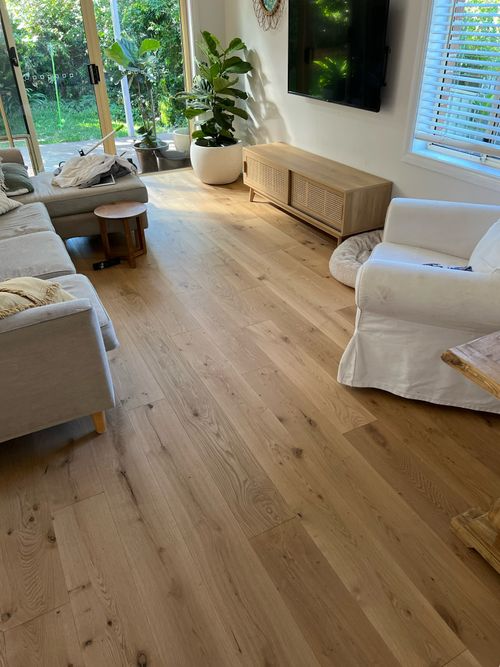
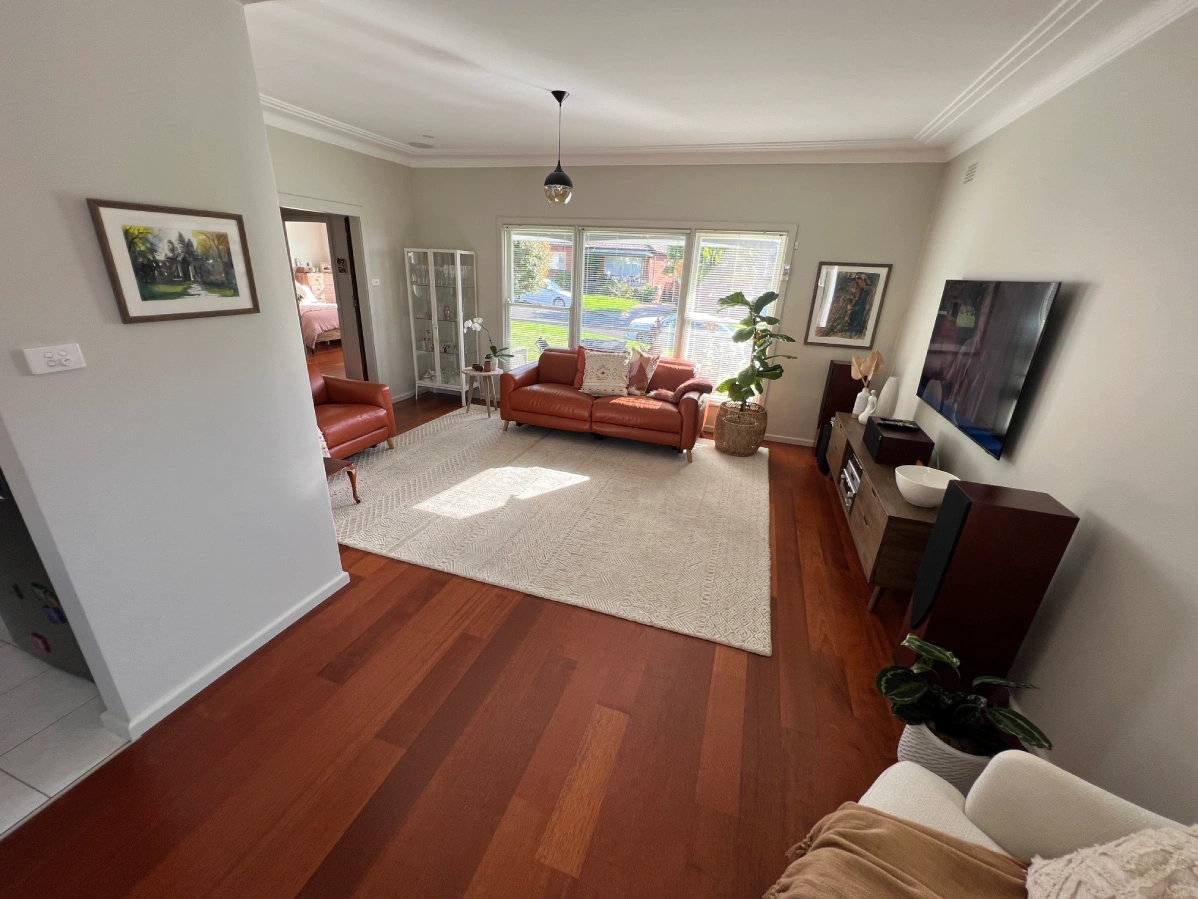
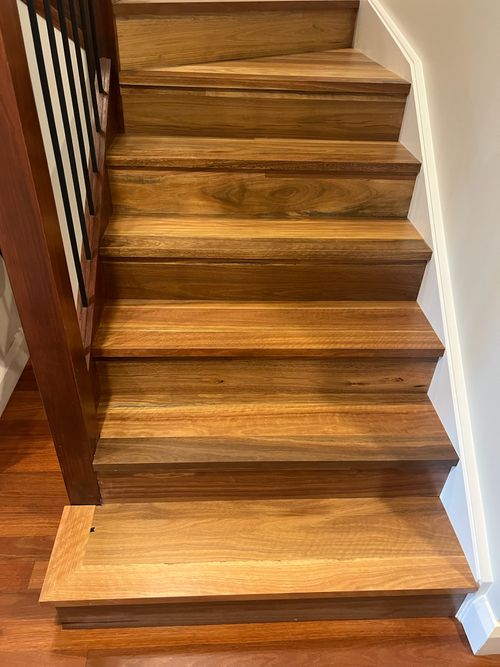
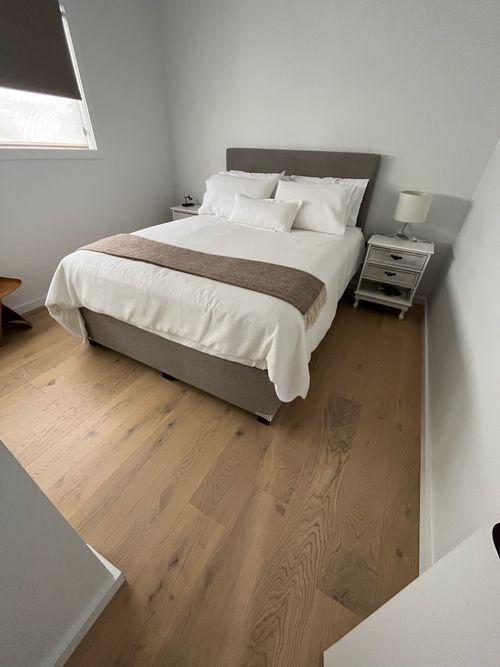
We supply and install floating floors across the Wollongong region and surrounding Illawarra suburbs, including:
Not sure if we cover your area? Get in touch, we service a wide range of locations across the region.
From installation queries to maintenance tips, you'll find the answers here.
A floating floor is installed over an underlay without being glued or nailed to the subfloor. The boards lock together and "float" as a single layer, making installation faster and easier than traditional fixed methods.
It depends on the product. Hybrid floating floors are fully waterproof and suitable for kitchens, bathrooms and laundries. Laminate floating floors are not waterproof and should be kept away from moisture-prone areas. Engineered timber has some moisture resistance but is not waterproof.
In most cases, yes. Floating floors can be installed over existing tiles provided the surface is level, stable and in good condition. Our team will assess your subfloor during the site inspection to confirm suitability.
Hybrid floating floors are the most popular choice for homes due to their waterproof performance, durability and realistic appearance. Laminate is a strong budget option for dry areas, while engineered timber suits those looking for a genuine hardwood aesthetic.
With proper care, quality floating floors typically last 15 to 25 years. Hybrid and engineered timber products at the premium end of the market can last longer, particularly in lower-traffic areas.



Complete the form below to download Flooring Uncovered: Your Comprehensive Guide and we'll email it directly to your inbox.



%20(1).png)
.png)